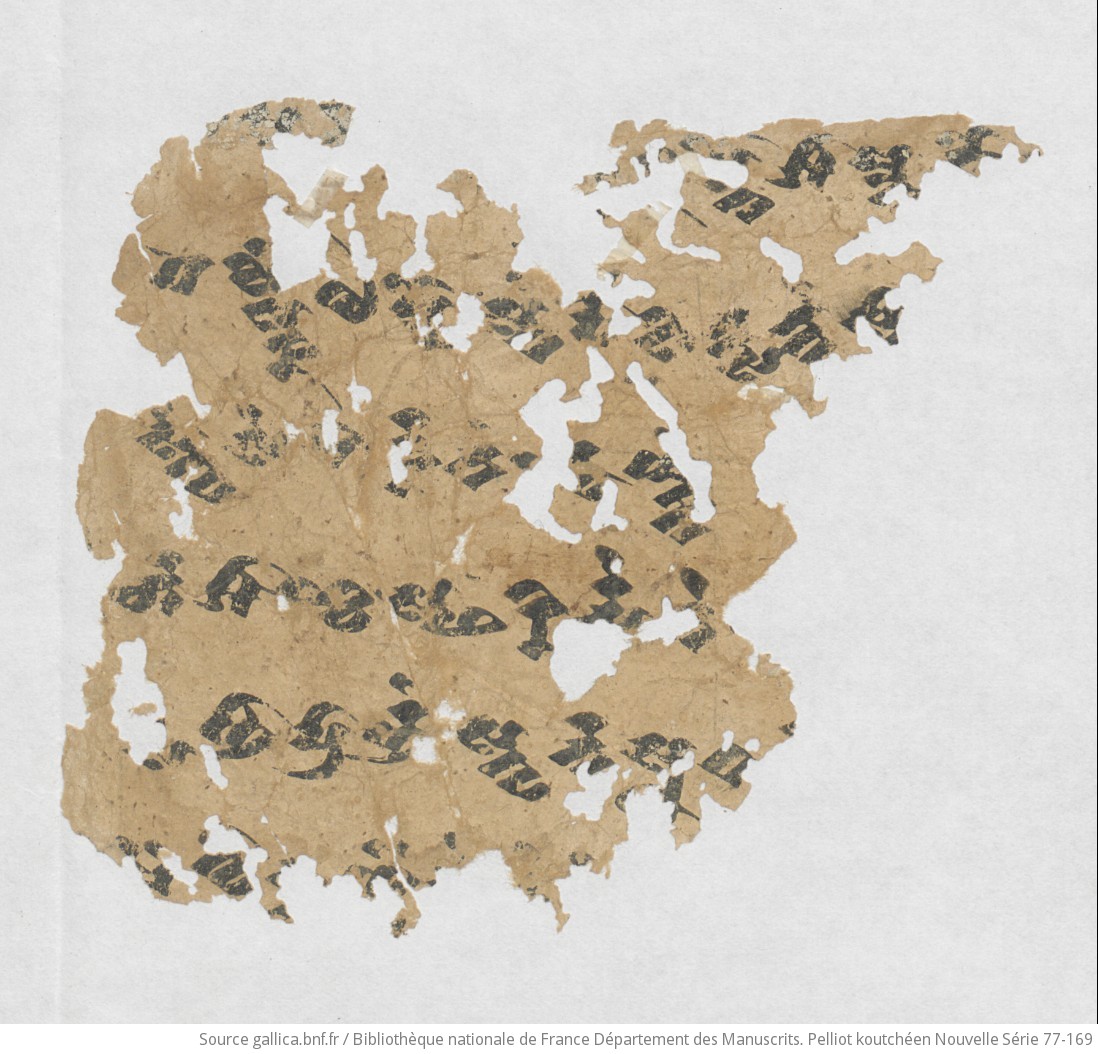
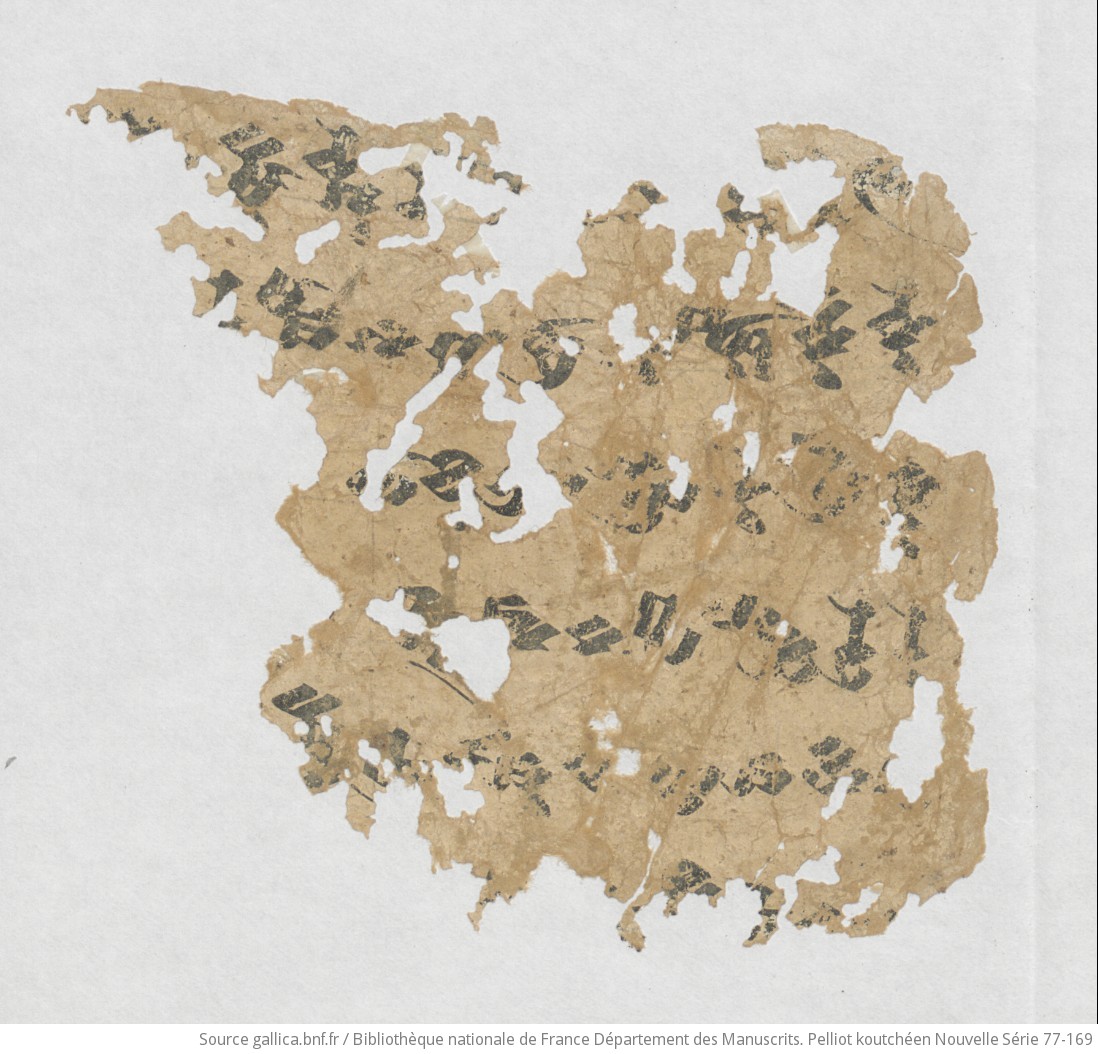
Work in progress
PK NS 78.1
| Known as: | PK NS 78.1; Pelliot Koutchéen Nouvelle Série 78.1 |
|---|
| Cite this page as: | Georges-Jean Pinault; Melanie Malzahn (collaborator). "PK NS 78.1". In A Comprehensive Edition of Tocharian Manuscripts (CEToM). Created and maintained by Melanie Malzahn, Martin Braun, Hannes A. Fellner, and Bernhard Koller. https://cetom.univie.ac.at/?m-pkns781 (accessed 02 Jul. 2025). |
|---|
Edition |
| Editor: | Georges-Jean Pinault; Melanie Malzahn (collaborator) |
|---|
| Date of online publication: | 2015-05-26 |
|---|
Provenience |
| Main find spot: | Duldur-akur |
|---|
| Expedition code: | M 496.13 |
|---|
| Collection: | Bibliothèque nationale de France, fonds Pelliot Koutchéen (Paris) |
|---|
Language and Script |
| Language: | TB |
|---|
| Linguistic stage: | classical |
|---|
| Script: | classical |
|---|
Text contents |
| Title of the work: | Supriyanāṭaka |
|---|
| Text genre: | Literary |
|---|
| Text subgenre: | Drama |
|---|
| Verse/Prose: | prose; verse |
|---|
Object |
| Manuscript: | Supriyanāṭaka PK NS 78 |
|---|
| Material: |
ink
on paper |
|---|
| Form: | Poṭhī |
|---|
| Size (h × w): | 11.3 × 12.4 cm |
|---|
| Number of lines: | 6 |
|---|
| Interline spacing: | 2.0 cm |
|---|
Images
Transliteration
| a1 | (–) [m](·) [r]a (– – –) [r](·) [m]n[o] śā m[n]a to /// |
|---|
| a2 | pa [l]sk[o] o mpo staṃ [po] au ntsa nte s(·)ā /// |
|---|
| a3 | swe se ta rka naṃ • tū y[k]n[e] ○ /// |
|---|
| a4 | rbha śā¯ ¯[ṅ]k spha ri rse te ○ /// |
|---|
| a5 | (·)s(·) ñī prā rñaṃ swa rna sū ta [r](·)(·) /// |
|---|
| a6 | [ṣ]ai w[ī] k[t]a ñ(·)ä (·)e [r](·)(·) /// |
|---|
| b1 | (–) – – tu /// |
|---|
| b2 | [ci] ntā ma ṇi [w]a me¯ ¯r [p]yā kṣn(·) /// |
|---|
| b3 | re rī no¯ ¯s̝ dhya na nma [spe] ○ /// |
|---|
| b4 | rn[e] śmā re ysā [y]o ka ña ○ /// |
|---|
| b5 | ke kt(·)e ñṣai [p]e ñī [yai] sa mśa [k](·) /// |
|---|
| b6 | o [ro] c[c]i (– – –) [ru] pke śne – /// |
|---|
Transcription
Translation
| a1 | ... but the people, as it were, as much ... |
|---|
| a2 | ... following the (pure?) thinking all began to ... |
|---|
| a3 | ... it releases rain. In that way ... |
|---|
| a4 | ... the x-conch, the crystal, this one ... |
|---|
| a5 | ... to me the golden sūtra of p. ... |
|---|
| b1 | ... |
|---|
| b2 | ... the cintāmaṇi jewel on the pillar ... |
|---|
| b3 | ... having abandoned the meditations the zeal ... |
|---|
| b4 | ... they stood in (the sky); the gold-colored ... |
|---|
| b5 | ... the splendor of the body, this one over there with ten ... |
|---|
| b6 | ... the big ones, having a ... face in total ... |
|---|
Commentary
Philological commentary
| * | rbhaśāṅk ought to be the final part of a loan from a Sanskrit compound with second member śaṅkha- 'shell, conch'; the first part can only be garbha- 'uterus' or darbha- 'grass', since there are no other words in Sanskrit ending in -rbha-. |
|---|
| n1 | °pälsko has to be the second member of a compound. |
|---|
| n2 | prārñaṃ cannot be a direct borrowing from a Sanskrit word; maybe it is an incorrect re-Sanskritized Prakrit form. |
|---|
| n3 | Word separation is unclear. |
|---|
| n5 | Maybe one can restore (ipre)rne 'in the sky'. |
|---|
| n6 | śak is the first member of a compound 'having ten x' or a mere number compound. |
|---|
| n7 | rup is most likely the second member of a compound 'having a ... face'. |
|---|
Remarks
| * | A small, much damaged fragment from the left part of a leaf with the string hole and the left margin. Recto and verso cannot be determined. |
|---|
Linguistic commentary
| n4 | śmāre is a syncopated form of the (late) 3.pl. preterite śimāre from stämā- 'to stand'. |
|---|