
PK NS 15
| Known as: | PK NS 15; Pelliot Sanskrit numéro bleu 18.5; PS Bl 18.5 |
|---|---|
| Cite this page as: | Michaël Peyrot. "PK NS 15". In A Comprehensive Edition of Tocharian Manuscripts (CEToM). Created and maintained by Melanie Malzahn, Martin Braun, Hannes A. Fellner, and Bernhard Koller. https://cetom.univie.ac.at/?m-pkns15 (accessed 18 Nov. 2026). |
Edition | |
| Editor: | Michaël Peyrot |
Provenience | |
| Collection: | Bibliothèque nationale de France, fonds Pelliot Koutchéen (Paris) |
Language and Script | |
| Language: | Skt.; TB |
Text contents | |
| Text genre: | Literary |
| Text subgenre: | Gloss |
Object | |
| Material: | ink on paper |
| Form: | Poṭhī |
| Number of lines: | 7+? |
Images
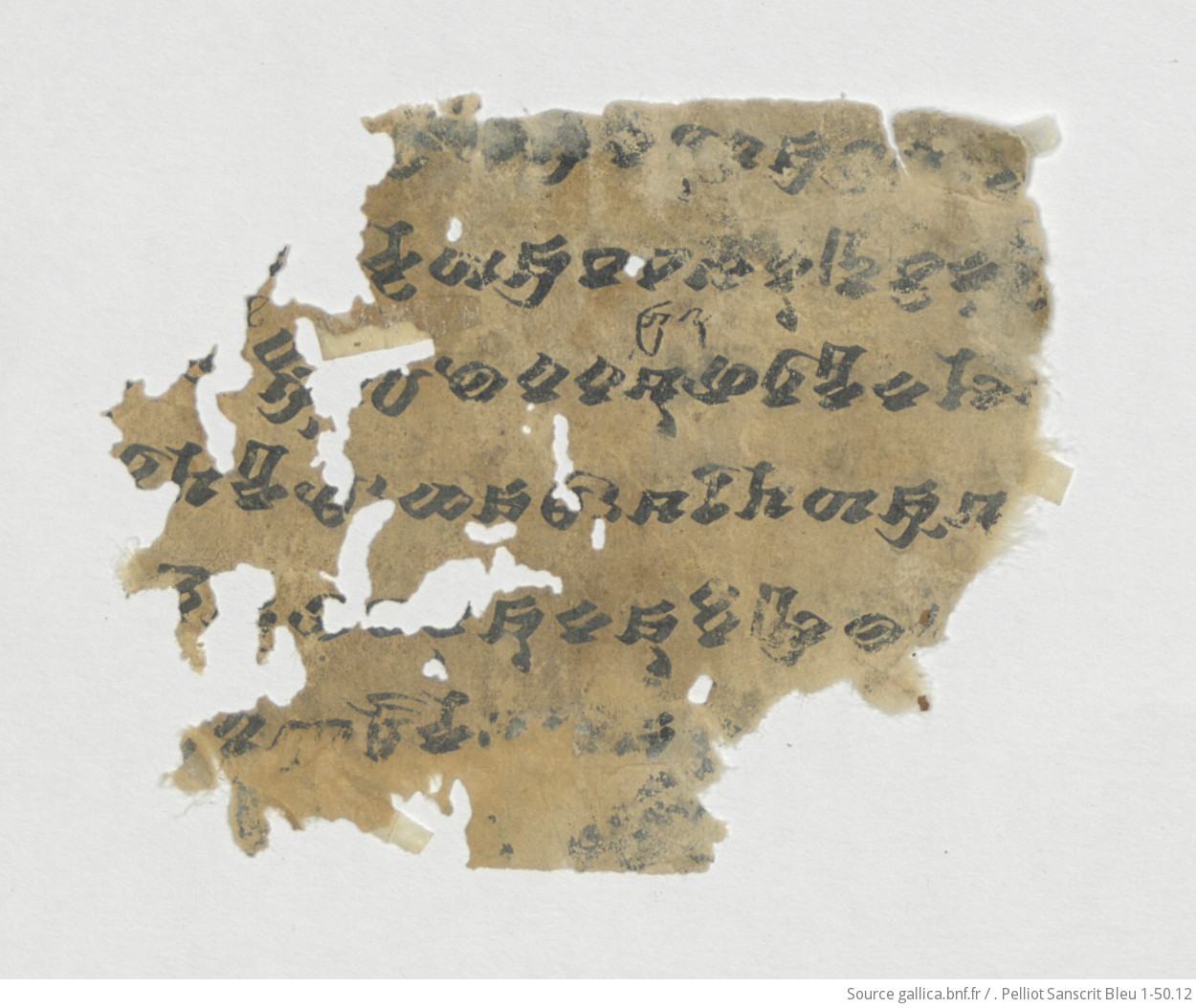
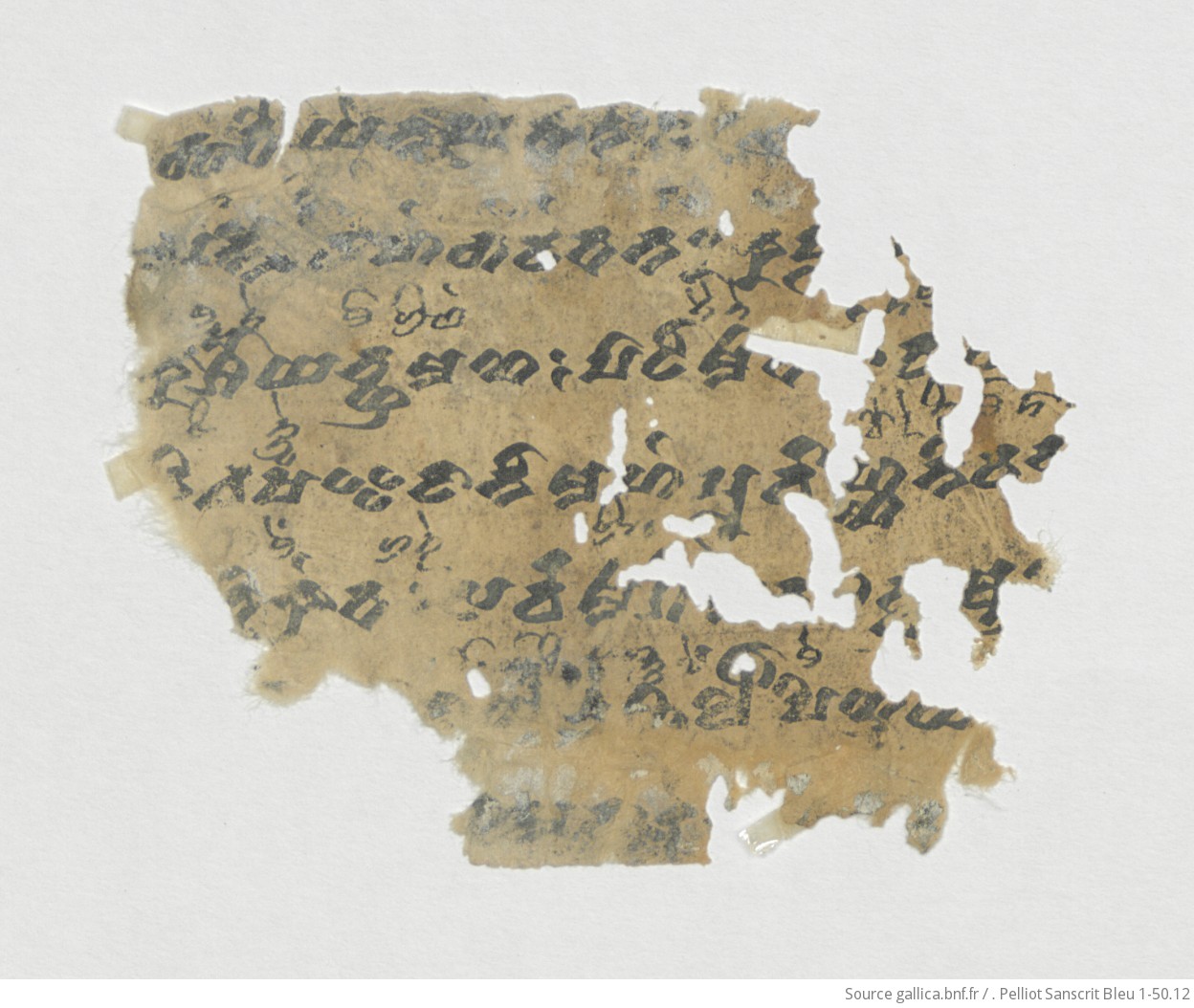
Images from gallica.bnf.fr by courtesy of the Bibliothèque nationale de France, Département des Manuscrits, Pelliot koutchéen.
Transliteration
| a4x | we ñi |
|---|---|
| a4y | ka |
| b1x | ta (–) [kau] |
| b2x | – m[ts]a te |
| b2y | mā ñi¯ ¯ś• |
| b2z | nai ne [t]· [m]· |
| b3x | si |
| b3y | kuce |
| b3z | cau re [k]i [mā] tā – |
| b4x | [tu] meṃ |
| b4y | ña ke |
| b4z | ñi¯ ¯[ś] |
| b5x | [p]o y·ā ·i sa [y]ku we [r]me(·) |
Transcription
| a4x | n1 weñi |
|---|---|
| a4y | n2 kä |
| b1x | n3 ta(tā)kau |
| b2x | n4 (te)mtsate |
| b2y | mā ñiś |
| b2z | n{r}aine t(e)m(tsate) |
| b3x | n5n6 si |
| b3y | kuce |
| b3z | cau reki mā tā(rkaṃ) |
| b4x | n7 tumeṃ |
| b4y | ñake |
| b4z | ñiś |
| b5x | n8 po y(t)ā(r)isa ykuwerme(ṃ) |
Translation
| a4x | would say |
|---|---|
| a4y | ... |
| b1x | been |
| b2x | was born |
| b2y | not I |
| b2z | was born in hell |
| b3x | ... |
| b3y | that |
| b3z | if he does not give up this word |
| b4x | thereupon |
| b4y | now |
| b4z | I |
| b5x | having come over the whole way |
Commentary
Remarks
| Sanskrit with interlinear glosses in TB. |
Philological commentary
| n1 | The first element glosses Skt. bhāṣeta 'would say', a4ykä glosses Skt. tāṃ (vācaṃ) 'that word' (both Hartmann 1991). |
|---|---|
| n3 | Glosses Skt. bhūto 'been'. (Hartmann 1991). |
| n4 | temtsate glosses Skt. (upa)panno 'reborn' (Hartmann 1991); b2ymā ñiś glosses Skt. [nā]haṃ 'not I' (Hartmann 1991, (nā)haṃ); b2znraine temtsate glosses Skt. narak(e)ṣū(papannaḥ) 'reborn in the hells' (Hartmann 1991). |
| n6 | si(?) glosses Skt. (anava)kāśo 'impossible' (Bechert and Waldschmidt 1973: I, 48a; Hartmann 1991); b3ykuce glosses Skt. yac 'that', b3zcau reki mā tārkaṃ glosses Skt. (t)āṃ v(ā)c(am aprahāya) 'without giving up this word' (both Hartmann 1991). |
| n7 | tumeṃ glosses Skt. eṣa 'he' (Hartmann 1991). Evidently, this gloss is not an exact translation. b4yñake glosses Skt. idānīm 'now', b4zñiś glosses Skt. ahaṃ 'I' (both Hartmann 1991). |
| n8 | Glosses Skt. sarvamā[r]g[am] (eva) [g]atv(ā) 'having come the whole way' (Bechert and Waldschmidt 1973: IV, 350b; Hartmann 1991). |
Linguistic commentary
| n2 | kä: [l]· seems also possible. Of course, onethinks of wek 'voice' or a form of weñ 'speak'. Instead of ka, a reading [w]· cannot be excluded completely, although it does not seem likely. |
|---|---|
| n5 | si is probably the ending of an infinitive; the root is lost completely. b3y TB kuce, the obl. of kuse 'who, what', can also be used as a complementiser 'that' (this usage is probably a syntactic calque on Skt. yat). |
References
other
Peyrot 2015b: 118-121
Catalogue
Bibliography
Bechert, Heinz, and Ernst Waldschmidt. 1973. Sanskrit-Wörterbuch der buddhistischen Texte aus den Turfan-Funden. Göttingen: Vandenhoeck & Ruprecht.
Hartmann, Jens-Uwe. 1991. “Untersuchungen zum Dīrghāgama der Sarvāstivādins.” Habilitation, Göttingen.
Hartmann, Jens-Uwe, and Klaus Wille. 1997. “Die nordturkestanischen Sanskrit-Handschriften der Sammlung Pelliot (Funde buddhistischer Sanskrit-Handschriften IV).” In Untersuchungen zur buddhistischen Literatur. Zweite Folge. Gustav Roth zum 80. Geburtstag gewidmet, edited by Heinz Bechert, Sven Bretfeld, and Petra Kieffer-Pülz, 131–82. Sanskrit-Wörterbuch der buddhistischen Texte aus den Turfanfunden, Beiheft 8. Göttingen: Vandenhoeck & Ruprecht.
Peyrot, Michaël. 2015b. “Notes on Tocharian glosses and colophons in Sanskrit manuscripts II.” Tocharian and indo-European Studies 16: 107–30.

