
IOL Toch 926
| Known as: | IOL Toch 926 |
|---|---|
| Cite this page as: | Michaël Peyrot. "IOL Toch 926". In A Comprehensive Edition of Tocharian Manuscripts (CEToM). Created and maintained by Melanie Malzahn, Martin Braun, Hannes A. Fellner, and Bernhard Koller. https://cetom.univie.ac.at/?m-ioltoch926 (accessed 08 Jul. 2025). |
Edition | |
| Editor: | Michaël Peyrot |
Provenience | |
| Main find spot: | Unknown |
| Collection: | British Library (London) |
Language and Script | |
| Language: | Skt.; TB |
| Linguistic stage: | classical |
| Script: | classical |
Text contents | |
| Title of the work: | Udānavarga |
| Passage: | 32.49c-32.55c |
| Text genre: | Literary |
| Text subgenre: | Doctrine |
| Verse/Prose: | prose |
Object | |
| Material: | ink on paper |
| Form: | Poṭhī |
| Size (h × w): | 5.5 × 7.3 cm |
| Number of lines: | 4 |
Images
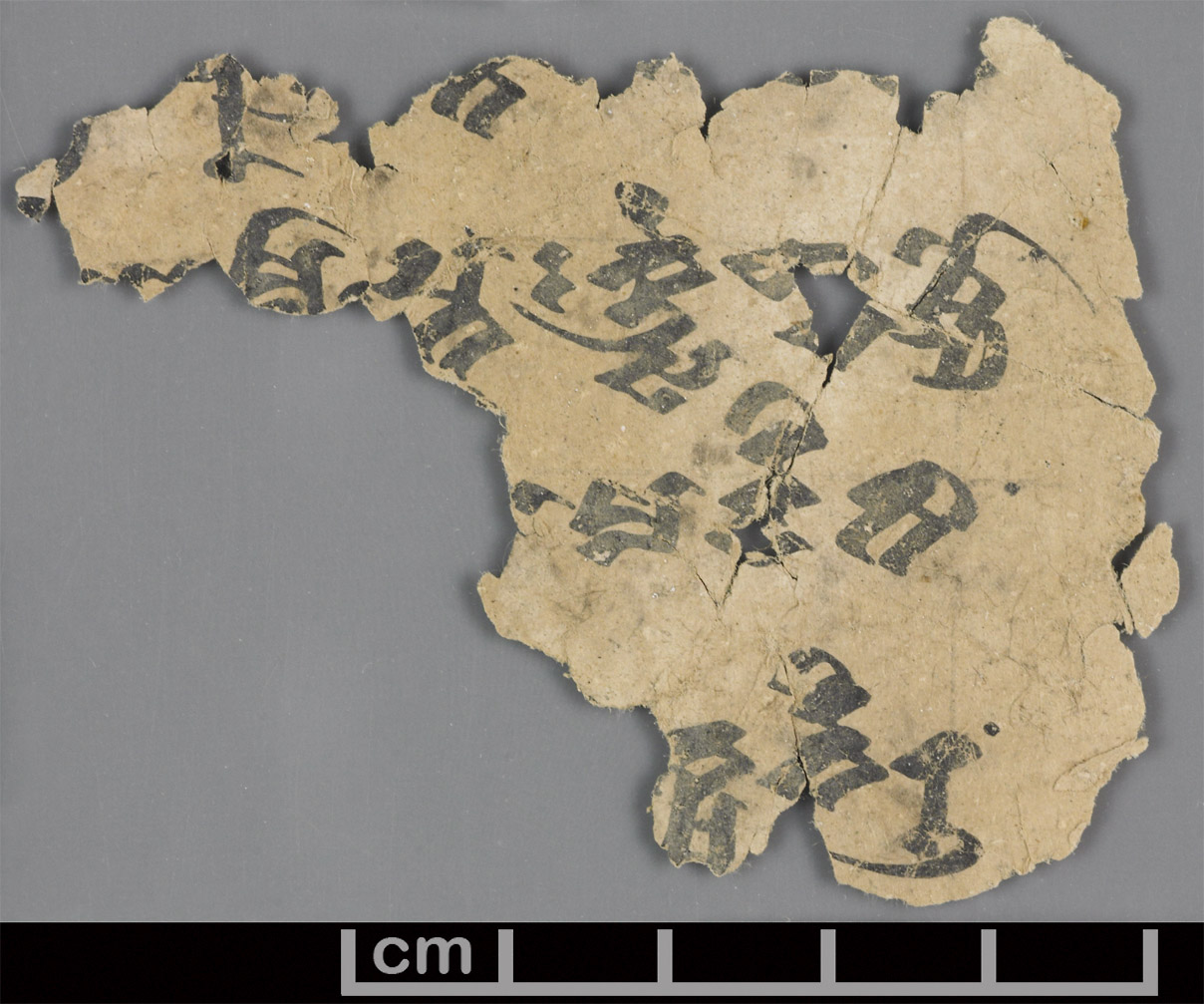
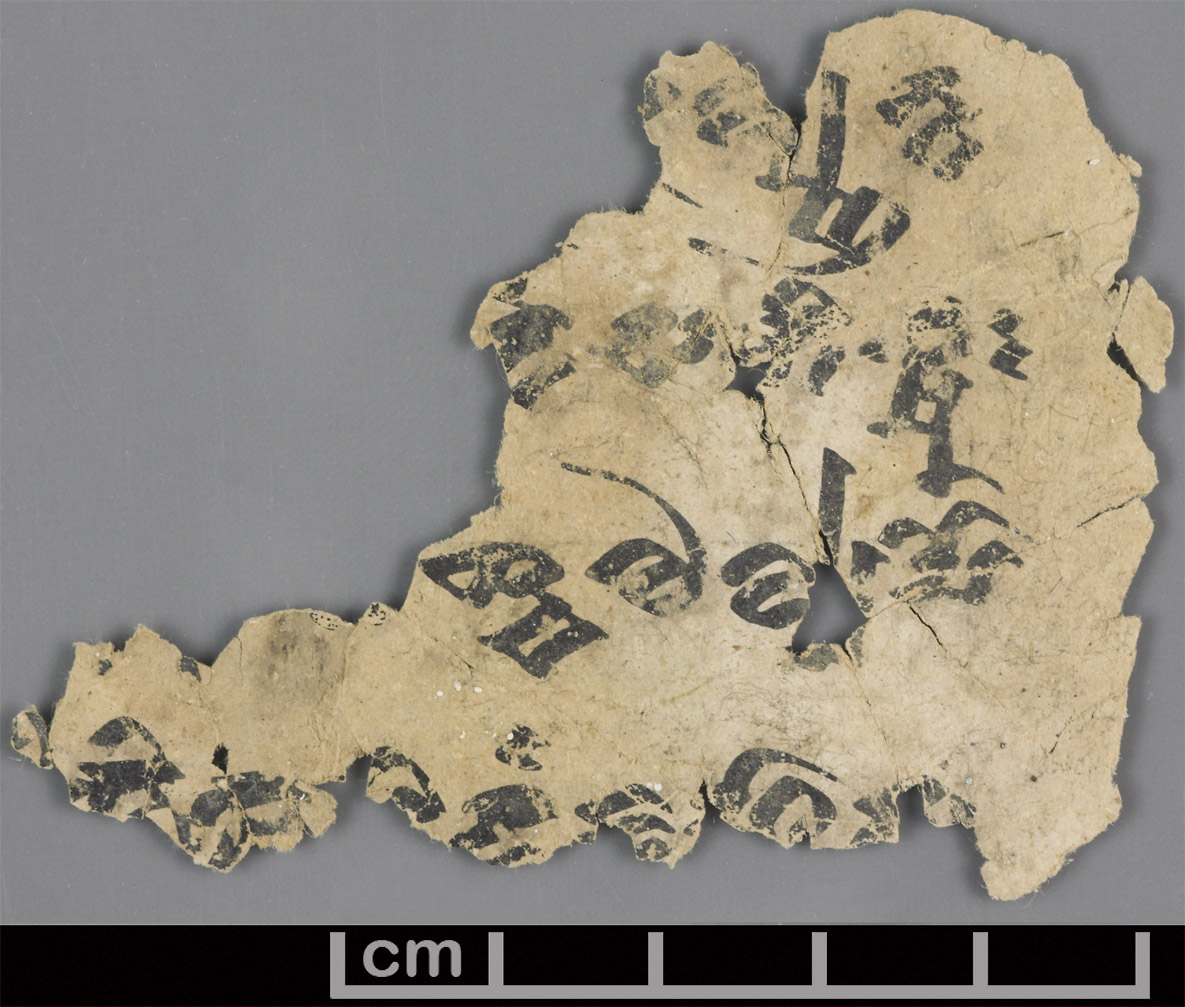
Images from idp.bl.uk by courtesy of the International Dunhuang Project and the British Library.
Transliteration
| a1 | /// ·t· – – – |
|---|---|
| a2 | /// pta ḥ kuse s̝pa śco |
| a3 | /// • ma rdi tā |
| a4 | /// kṣ· rni ru |
| b1 | /// [k]· lyñ[e] nta |
| b2 | /// te sa bhi kṣu ḥ |
| b3 | /// – s̝pa o lya po |
| b4 | /// [r]i daṃ ja hā t[ya] |
Transcription
| a1 | n1 /// ·t· – – – | |
|---|---|---|
| a2 | n1n2 /// (prā)ptaḥ kuse ṣpä śco¬ | |
| a3 | (nai)n3 /// • marditā | |
| a4 | n4 /// (bhi)kṣ(u)r niru¬ | |
| b1 | (cyate)n5n6 /// (na)k(a)lyñenta | |
| b2 | n7 /// (vetha)te sa bhikṣuḥ | |
| b3 | n7n8 /// – ṣpä olyapo | |
| b4 | n8n9 /// (bhikṣu)r idaṃ jahāty a¬ | |
| * | (pāram) |
Translation
| a1 | ... |
|---|---|
| a2 | [SKT]: (and who) has attained (the diminution of hatred) [TB]: and who has (attained the diminution) of hatred |
| a3 | [SKT]: [and] crushed (the thorns of village [life]) |
| a4 | [SKT]: (he) is (verily) called a monk |
| b1 | [TB]: scoldings, (killings and binding) |
| b2 | [SKT]: who (does not) stagger (because of happiness and sorrow), he is a monk |
| b3 | [TB]: (he who has not gone too far), nor (clung) too much |
| b4 | [SKT]: (that) monk gives up this world |
Commentary
Parallel texts
| m-tht1327; Bernhard 1965: 446-447; Hahn 2007: 140-141 |
Philological commentary
| n1 | A little piece is probably wrongly attached to the left; it is not considered in the transliteration. |
|---|---|
| n2 | Uv.32.49c yaś ca dveṣakṣayaṃ prāptaḥ |
| n3 | Uv.32.50b marditā grāmakaṇṭakāḥ |
| n4 | Uv.32.50d sa vai bhikṣur nirucyate |
| n5 | Uv.32.54b hy ākrośāś ca vadhāś ca bandhanaṃ ca |
| n6 | of the k only minimal rests can be seen. If nākälñe /nákəlńe/ ‘reproach’ has a pl. nakalñenta /nakə́lńenta/, we could nevertheless equate ākrośāś ca and identify it as Uv. 32.54b. |
| n7 | Uv.32.54d sukhaduḥkhena na vethate sa bhikṣuḥ |
| n8 | Uv.32.55a yo nātyasaraṃ na cātyalīyaṃ |
| n9 | Uv.32.55c sa tu bhikṣur idaṃ jahāty apāraṃ |
References
Online access
Edition
Tamai 2007: №926; Peyrot 2008a: 117-118
Bibliography
Bernhard, Franz. 1965. Udānavarga. Band I, Einleitung, Beschreibung der Handschriften, Textausgabe, Bibliographie. Sanskrittexte aus den Turfanfunden 10. Göttingen: Vandenhoeck und Ruprecht.
Hahn, Michael. 2007. Vom rechten Leben, Buddhistische Lehren aus Indien und Tibet, Aus dem Sanskrit und aus dem Tibetischen übersetzt und herausgegeben. Frankfurt am Main/Leipzig: Verlag der Weltreligionen (im Insel Verlag).
“The International Dunhuang Project: The Silk Road Online.” n.d. http://idp.bl.uk.
Peyrot, Michaël. 2008a. “More Sanskrit – Tocharian B bilingual Udānavarga fragments.” Indogermanische Forschungen 113: 83–125.
Tamai, Tatsushi. 2007. “An edition of the Tocharian fragments IOL Toch 853 – IOL Toch 1247 in the India Office Library, London.” The International Dunhuang Project: The Silk Road Online. 2007. http://idp.bl.uk/database/oo_cat.a4d?shortref=Tamai_2007.

